

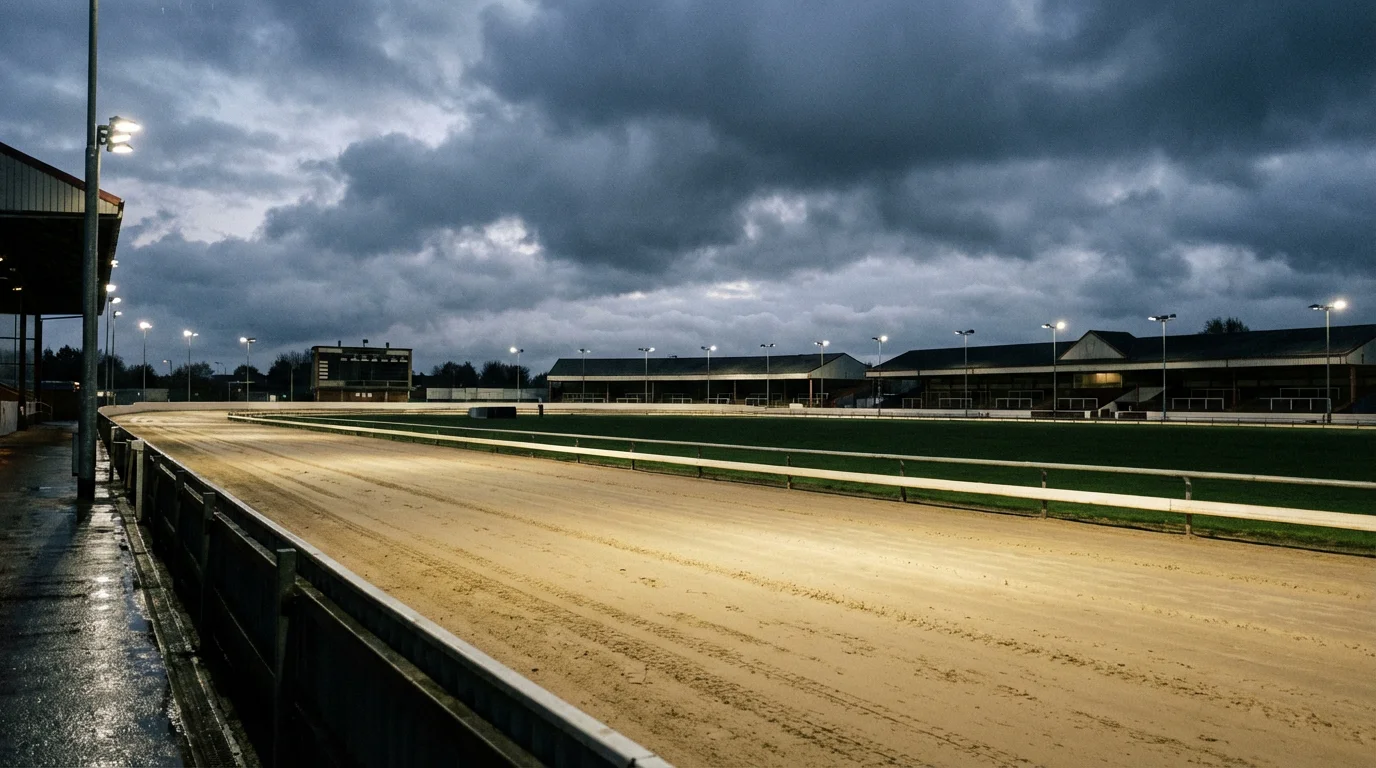
The Scottish Greyhound Derby at Shawfield Stadium, Glasgow, is one of the fixtures that connected modern greyhound racing to its industrial-heartland roots. While the English Derby at Towcester and the Irish Derby at Shelbourne Park attract the bulk of ante-post attention, the Scottish Derby occupied its own space in the calendar — a Category One event with a loyal following, competitive fields, and an ante-post market that received less scrutiny than its southern and Irish counterparts. The last Scottish Derby was held in 2019, and Shawfield Stadium has been closed since March 2020. However, understanding how this market operated offers valuable lessons for ante-post bettors approaching any thin futures market in greyhound racing.
Less scrutiny, in ante-post terms, usually meant more opportunity. Thin markets with fewer participants are where pricing inefficiencies survive longest. The Scottish Derby’s ante-post book drew less casual money than the English or Irish equivalents, which meant the odds were set by a smaller pool of informed opinion and may not have fully reflected the true probability of each dog’s chances.
This preview covers Shawfield’s track characteristics, the event’s format and history, and how the ante-post market on the Scottish Derby compared to the bigger fixtures — including whether the pricing gaps created genuine value for futures bettors willing to look north of the border.
Shawfield: Track Profile and Race Format
Shawfield Stadium was Scotland’s only surviving greyhound track, located in Rutherglen on the south side of Glasgow. Greyhound racing at the venue began on 14 November 1932, making it one of the oldest continuously running greyhound venues in the UK before its closure in March 2020. Its survival until then owed much to the loyalty of its local racing community and the commercial viability of its BAGS and BEGS schedule, which generated the day-to-day revenue that sustained the operation.
The track is a standard four-bend circuit with a circumference of 432 metres. The Scottish Derby was run over 480 metres — the standard sprint distance — with six-dog fields in each round. The run to the first bend is relatively short, which amplifies the importance of early pace and trap draw. Dogs that break quickly and establish position before the first turn have a pronounced advantage at Shawfield, more so than at tracks with longer straights where wider runners have time to recover their position.
The track surface was sand-based, which produced different running characteristics than the Regupol or Eco-Track surfaces used at some English venues. Dogs accustomed to synthetic surfaces may have taken a run or two to adjust to Shawfield’s grip and footing, which was a consideration for ante-post bettors evaluating English-trained runners entering the Scottish Derby. Conversely, dogs that raced regularly on sand tracks — either at Shawfield itself or at similar venues — carried a surface-familiarity advantage that wasn’t always reflected in the ante-post price.
The Scottish Derby format followed the standard knockout structure: first-round heats, quarter-finals (if field size warranted), semi-finals, and a six-dog final. The total number of rounds depended on the entry, which was typically smaller than the English or Irish Derby but large enough to require three or four rounds of elimination. The compressed format meant fewer rounds for upsets to occur, which slightly favoured the better dogs — and slightly reduced the variance that makes ante-post betting on longer tournaments so unpredictable.
Prize money for the Scottish Derby was lower than the English and Irish equivalents, reflecting the event’s smaller commercial footprint. This affected the quality of entries: some top trainers chose to skip the Scottish Derby in favour of other competitions that clashed in the calendar, while others used it as a development opportunity for promising but unproven dogs. The result was a field that typically included a handful of genuine open-class performers alongside progressive dogs from Scottish and northern English kennels — a mix that created more volatility in outcomes and more potential value in the ante-post market.
Historical Trends and Notable Winners
The Scottish Greyhound Derby had a history stretching back to 1928, though its prominence waxed and waned with the fortunes of greyhound racing in Scotland. In its peak decades, the event attracted top-class entries from across the UK and Ireland. More recently, the field quality was more variable, but the event retained its Category One status and continued to produce competitive racing until its final running in 2019.
Historical trends in the Scottish Derby revealed a few patterns relevant to ante-post betting. Irish-trained dogs had a strong record at Shawfield, particularly those from kennels experienced in travelling dogs to away venues. The logistics of transporting dogs from Ireland to Glasgow and acclimatising them to a new track and surface are non-trivial, and the kennels that manage this process well — trial at Shawfield in advance, arrive early, allow adjustment time — have a track record that bears out in the results. When evaluating Irish entries in the Scottish Derby ante-post market, the trainer’s history of campaigning away from home is as important as the dog’s raw form.
Local entries — dogs trained in Scotland or the north of England that raced regularly at Shawfield — had home-track advantage that should not have been underestimated. A dog that knew the track, was comfortable with the surface, and didn’t face the travel stress of a long journey started each round with a small but real edge. In a tight heat where the margins were fractions of a second, that familiarity could be the difference between qualifying and going home. Local entries were often available at longer ante-post odds than their chances justified, because the market’s attention was focused on the bigger-name dogs from southern or Irish kennels.
Trap one historically performed well in Scottish Derby finals at Shawfield, consistent with the track’s short run to the first bend. Dogs drawn on the inside had a positional advantage that was difficult to overcome even for faster rivals drawn wide. This matters for ante-post assessment because it means trap-draw luck is particularly influential at Shawfield — a dog with excellent form but poor trap versatility is more vulnerable here than at a track where the bend geometry is more forgiving.
Ante-Post Market Depth and Pricing
The ante-post market on the Scottish Greyhound Derby was thinner than the English or Irish Derby in every dimension: fewer bookmakers offered it, fewer dogs were priced, and less money flowed into the market. This thinness was both the challenge and the opportunity for futures bettors.
Typically, two to four bookmakers would offer ante-post odds on the Scottish Derby, compared to six or more for the English equivalent. The bookmakers that priced the market tended to be those with broader greyhound coverage — Bet365, Paddy Power, and occasionally BoyleSports or William Hill. The range of priced selections was narrower: where the English Derby might have 40 or more dogs listed, the Scottish Derby ante-post market might cover 15 to 25 entries, focusing on the expected leading contenders and a selection of longer-priced options.
This narrow market creates pricing opportunities for two reasons. First, with fewer bookmakers pricing the market, there’s less competitive pressure to sharpen odds. Each bookmaker sets its prices with less reference to competitors than in the English Derby, where every firm watches every other firm’s prices continuously. This can result in prices that diverge more from the true probability, in both directions — some dogs overpriced, some underpriced, with the errors less quickly corrected by market forces.
Second, the lower volume of money bet into the Scottish Derby ante-post market means that individual bets have a larger proportional impact on odds. A single £100 bet on a 33/1 shot in the English Derby barely moves the needle. The same bet in the Scottish Derby might shorten the dog to 20/1, because the bookmaker’s total liability is smaller and each additional bet represents a larger share of it. This means that timing matters more in the Scottish Derby market — placing your bet early, before other informed punters move the price, is more valuable here than in deeper markets.
Each-way terms on the Scottish Derby ante-post market were typically one-quarter the odds, first two places, consistent with other major events. NRNB was less commonly offered on the Scottish Derby than on the English or Irish equivalents, reflecting the event’s lower commercial profile. Cash-out availability was inconsistent — some bookmakers offered it, others didn’t, and availability may have changed as the event approached. If managing your position through cash-out is important to your strategy, confirm availability before committing your stake.
North of the Border, South of the Radar
The Scottish Greyhound Derby didn’t command the headlines, the prize money, or the betting volume of the English or Irish Derbies. It was a smaller event at a smaller track with a smaller market. For many ante-post bettors, it didn’t register at all — it sat below the radar, overshadowed by the flagship competitions that dominated greyhound betting coverage.
That’s precisely what made it interesting. Ante-post value exists where attention is lowest, because attention is what drives prices toward efficiency. In the English Derby, with its deep market and heavy scrutiny, finding a genuinely mispriced dog requires deep expertise and a bit of luck. In the Scottish Derby, with its thin market and limited scrutiny, the pricing inefficiencies were wider and more persistent. The dogs were real, the competition was genuine, and the ante-post market was one of the few in greyhound racing where a well-informed punter could find value without competing against a crowd of equally informed rivals. Though Shawfield and the Scottish Derby are now part of greyhound racing’s history, the principles of finding value in thin, under-scrutinised markets remain fully applicable to today’s ante-post betting landscape.
