

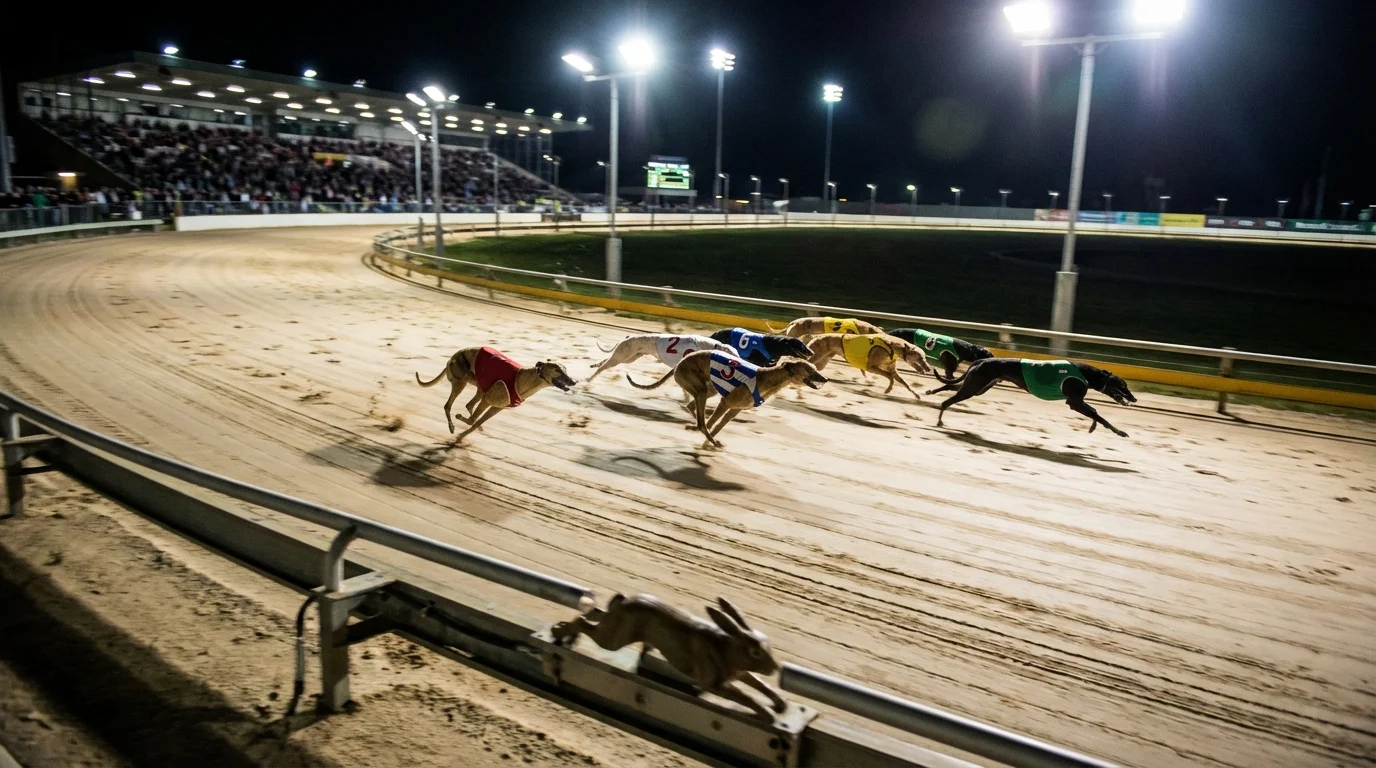
Ante-post is the Latin for “before the starting post” — but in greyhound betting, it means something much more specific than placing a wager early. It refers to a bet placed on a major greyhound event before the official race-day market opens, often weeks or even months in advance. The dog you’re backing may not have run its first heat yet. The final field of six hasn’t been determined. And that uncertainty — the fact that so much can change between your bet and the result — is exactly why ante-post odds are larger than anything you’ll see on race night.
For anyone familiar with horse racing futures, the concept translates directly. The mechanism is the same: commit your money early, accept the risk that your selection might not even compete, and in return, get a price that reflects all that built-in doubt. What makes greyhound ante-post betting distinct is the sport’s knockout tournament format. The English Derby, for instance, starts with roughly 192 entries and eliminates dogs round by round until six reach the final. Backing a dog at the ante-post stage means betting it can survive that entire gauntlet — not just win one race, but navigate weeks of heats, draws, and physical demands.
This guide breaks down the fundamentals. If you’ve never placed an ante-post greyhound bet, the sections below will explain how it differs from regular dog racing wagers, which events carry futures markets, and how the process works from betslip to settlement.
How Ante-Post Differs from Regular Greyhound Bets
The timing is different, the risk is different, the odds are different. Those three distinctions define the gap between ante-post and regular greyhound betting, and understanding each one is essential before placing a futures wager.
Start with timing. A standard greyhound bet is placed on a specific race, usually on the day of the meeting, once the race card has been published and the runners are confirmed. You know which dogs are running, which traps they’ve drawn, and what the going is like. Ante-post bets, by contrast, are placed before any of that information is available. For a major event like the English Greyhound Derby, ante-post markets might open four to six weeks before the first heats. At that point, you’re working with graded form, trial times, and trainer reputation — not confirmed entries or trap draws.
The risk profile follows directly from the timing. In regular greyhound betting, if a dog is withdrawn before the race, your stake is returned. The bet is void, and you move on. In ante-post markets, the default rule is the opposite: if your dog doesn’t run — for any reason — your stake is forfeited. You lose your money even though the dog never competed. This is the single biggest differentiator and the one that catches new punters most often. Some bookmakers offer “no runner, no bet” protections on selected events, but this is promotional, not guaranteed, and the conditions vary.
Then there are the odds. Because ante-post bets carry additional risk (non-runner forfeiture, field uncertainty, the long gap between bet and result), bookmakers offer significantly larger prices than they would on race day. A dog that might be 4/1 on the night of a Derby final could have been available at 25/1 or 33/1 in the ante-post market weeks earlier. That price gap is the incentive — and for skilled punters who can assess form early, it’s where the value lives. But it’s also where the trap sits. Those inflated odds aren’t charity; they’re compensation for a very real set of risks that most punters underestimate.
The types of bets available also differ. Ante-post greyhound markets are primarily outright winner markets — you’re picking the dog you think will win the entire competition. Some bookmakers offer each-way ante-post bets on larger events, paying out on first and second in the final. But you won’t find the full range of race-day options (forecasts, tricasts, trap bets) in ante-post markets. The market is simpler because the event is further away and the field is less defined.
Finally, the settlement timeline is worth noting. A regular greyhound bet settles within minutes of the race finishing. An ante-post bet placed six weeks before a Derby final doesn’t settle until that final is run, the result is declared, and the stewards have confirmed it. Your money is locked in for the duration, and your only early exit (if available) is the cash-out feature — which typically offers less than true market value.
Which Greyhound Events Have Ante-Post Markets?
Not every race gets an ante-post market — only the big ones. Bookmakers don’t offer futures odds on a Tuesday evening open race at Monmore or a BAGS meeting at Sunderland. Ante-post markets exist exclusively for major events, typically Category One competitions that run over multiple rounds with large entry fields and significant prize money. The economics are simple: bookmakers need enough interest, enough runners, and enough time between market opening and the final to justify creating and managing a futures book.
The English Greyhound Derby is the anchor of the ante-post greyhound calendar. Held at Towcester over 500 metres, it’s the most prestigious event in UK greyhound racing, carrying a winner’s prize of around £175,000. The knockout format — heats, second round, quarter-finals, semi-finals, final — makes it a natural fit for ante-post betting because the field is enormous and the road to the final is long. Most major UK bookmakers open Derby ante-post markets, and it’s typically the deepest and most liquid greyhound futures market available.
The Irish Greyhound Derby at Shelbourne Park is the second major ante-post event. Run over 550 yards on sand, it draws elite entries from both Irish and UK-based trainers and often features crossover dogs who also compete in the English Derby. Ante-post markets for the Irish Derby are widely available, though they tend to be slightly thinner than the English equivalent.
Beyond the two Derbies, ante-post markets are typically available for the following events, though coverage varies by bookmaker and year:
- The Greyhound St Leger — a stamina test over a longer distance, historically held at Perry Barr over 710m and recently at Nottingham over 730m. Different form profile, different ante-post dynamics.
- The Scottish Greyhound Derby at Shawfield — a fiercely regional event with a smaller but dedicated ante-post market.
- The Pall Mall at Oxford — a Category One event over 450 metres with a strong historical pedigree.
- The Cesarewitch — a stayer’s event with deep historical roots, recently held at various tracks.
- The Select Stakes — an invitational event where hand-picked greyhounds compete, creating a uniquely concentrated ante-post market.
Not every bookmaker covers every event. The English and Irish Derbies have near-universal ante-post coverage among major UK firms. The St Leger and Scottish Derby have good but not complete coverage. Smaller Category One events like the Pall Mall or Cesarewitch may only be offered by bookmakers with strong greyhound racing focus, such as BoyleSports or Star Sports. If you’re looking for a specific ante-post market, the most reliable approach is to check Oddschecker’s greyhound ante-post section, which aggregates available markets from multiple bookmakers.
BAGS and BEGS meetings — the Bookmakers’ Afternoon and Evening Greyhound Services, which provide the bulk of daily greyhound racing in the UK — do not carry ante-post markets. These are standard graded racing meetings with day-of-race betting only. Ante-post is reserved for events with tournament structures, large entry pools, and sufficient lead time to create a meaningful futures market.
How to Place Your First Ante-Post Greyhound Bet
Open your bookmaker, find the greyhound section, look for “Ante-Post” or “Futures.” That’s the basic navigation, and while the exact layout differs between betting sites, the path is consistent. Most major UK bookmakers have a dedicated greyhound tab in their sportsbook, with ante-post markets listed separately from daily race cards.
On Bet365, for instance, the greyhound section sits under “Racing” in the main navigation. Within it, you’ll find a tab or filter labelled “Ante-Post” that lists all currently open futures markets. At BoyleSports, the section is labelled “Future Dogs.” Oddschecker aggregates ante-post markets under “Greyhounds > Ante-Post” and lets you compare prices across bookmakers before choosing where to place your bet.
Once you’ve found an active ante-post market — say, the English Greyhound Derby outright winner — you’ll see a list of dogs with their current odds. Click on the dog you want to back, and the selection is added to your betslip. Enter your stake, review the potential returns, and confirm the bet. The process is identical to placing any other single bet on a bookmaker’s site.
What differs is what happens next. Unlike a race-day bet, there’s no race in the next few minutes. Your bet sits open, and the market continues to move. The odds on your dog may shorten (decrease) if other punters back it or it performs well in trials, or they may drift (increase) if concerns emerge. Your bet was struck at the price you took — subsequent market movements don’t affect your payout. This is a key advantage of ante-post: you’ve locked in a price that the rest of the market hasn’t caught up to yet, assuming you’ve identified genuine value.
Before confirming, check two things. First, look for any non-runner terms. Is the market NRNB, or does standard ante-post forfeiture apply? This information should be visible on the market page or in the bookmaker’s rules section. Second, check whether each-way betting is available and what the place terms are, if you want that option. Not all ante-post markets offer each-way, and those that do may have different terms than you’re used to from race-day betting.
After confirmation, your bet is live until the event concludes. You’ll be able to track its status in your “Open Bets” or “My Bets” section. If cash-out is available, you’ll see an offer value that updates as the market changes. Settlement happens after the final result is declared — not before.
Starting Early, Finishing Informed
Every ante-post expert was once a beginner who placed a £5 bet on a Derby favourite and waited six weeks to find out if it was smart or stupid. That’s the entry point, and there’s nothing wrong with it. Ante-post greyhound betting rewards curiosity — the kind that leads you to check a trainer’s record, study how a dog handles different distances, and notice that a 20/1 shot has been quietly posting the fastest trial times at Towcester.
Start small. Place a modest ante-post bet on an upcoming major event, ideally one where NRNB is offered so your first experience doesn’t end with a forfeited stake on a non-runner. Watch how the market moves. See how heats reshape the field and how prices adjust as the tournament progresses. The education is worth more than the wager.
The real skill in ante-post greyhound betting isn’t predicting which dog will win a final that’s weeks away. It’s knowing how to price uncertainty — how to look at a field of 192 dogs and identify the handful whose odds don’t properly reflect their chances of surviving the tournament. That’s a skill that develops with experience, and the only way to start building it is to place your first bet and pay attention to everything that happens afterward.
You don’t need to be an expert on day one. You just need to know what ante-post means, how it works, and where the risks sit. The rest comes with time, attention, and a willingness to read the fine print before the odds.
