

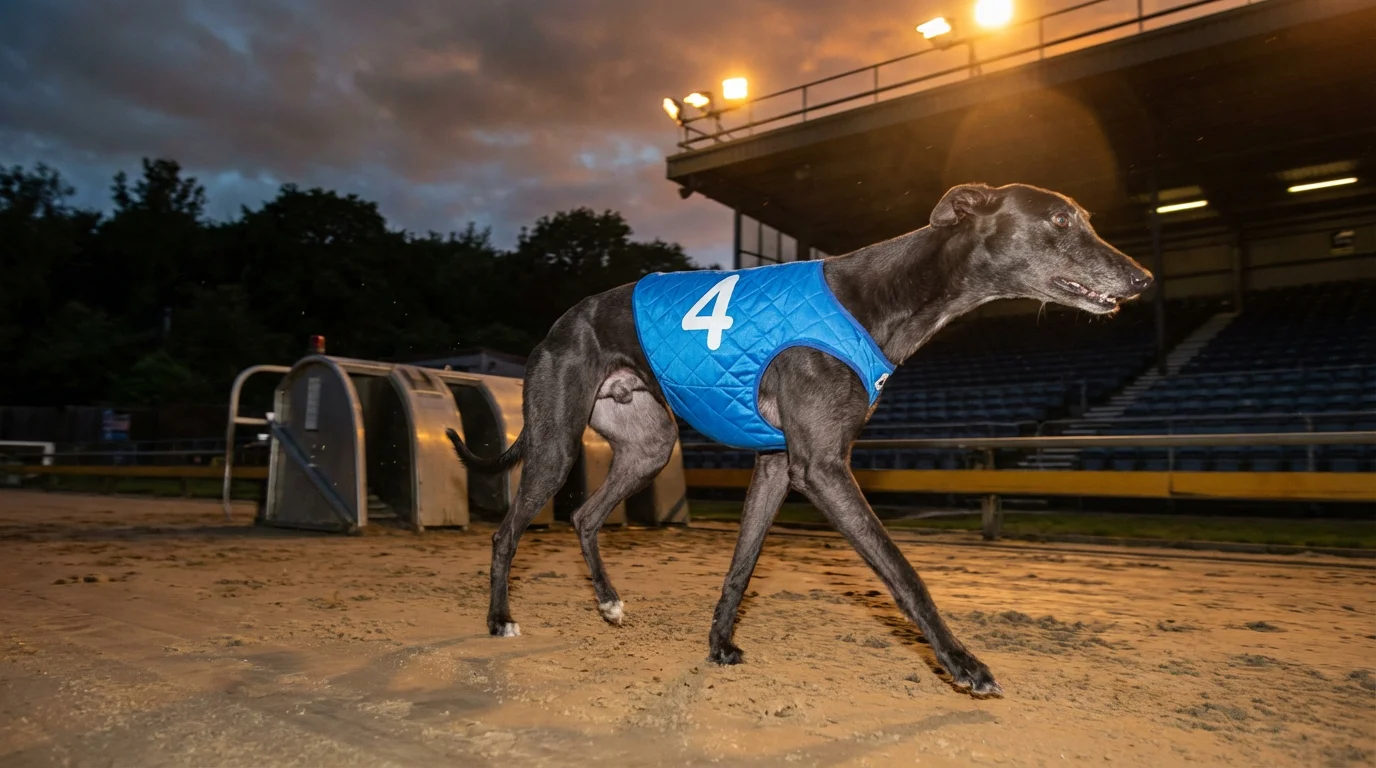
Puppy Derbies are the greyhound equivalent of a classic for three-year-olds in horse racing. They’re restricted to younger dogs — typically those born after a specific cutoff date — and they test a different profile of competitor than the open-age events. The dogs are faster-developing, less proven, and often running at the highest level for the first time. That combination of talent and inexperience makes Puppy Derbies fascinating to watch and uniquely challenging to bet on ante-post.
Where open-age events like the English Derby can draw on years of grading data and major-event form, Puppy Derbies are populated by dogs whose racing histories are short and whose ceilings are unknown. A dog might have twelve career races, six of them impressive and six inconclusive. The ante-post market has to price that ambiguity, and it often gets it wrong — overvaluing recent flashy performances while undervaluing the steadier dogs whose form is less spectacular but more consistent.
This article covers what Puppy Derby competitions actually are, how juvenile greyhound form differs from open-age form for ante-post purposes, and where to find odds on these events.
What Are Puppy Derby Competitions?
Puppy Derbies in UK and Irish greyhound racing are Category One or high-profile events restricted to dogs within a specific age bracket. The exact age qualification varies by competition, but the standard cutoff requires dogs to have been whelped (born) on or after a set date — usually January 1st of a particular year for events running the following calendar year. This restricts the field to dogs that are, broadly speaking, between one and two years old at the time of competition.
The most prominent Puppy Derbies include the Puppy Derby at Towcester, the Irish Puppy Derby, and various track-specific puppy competitions held at venues throughout the UK and Ireland. These events run in knockout format similar to their open-age counterparts — heats, semi-finals, and a final — though the total field size is often smaller because the eligible population of age-qualified dogs is inherently narrower than the open-age pool.
Prize money for Puppy Derbies varies. The headline events offer purses that, while below the open-age Derby, are significant enough to attract strong entries from leading kennels. Trainers view Puppy Derbies both as valuable competitions in their own right and as developmental milestones — a dog that performs well in a Puppy Derby is identified early as a potential contender for open-age major events in subsequent years.
The competition structure means that Puppy Derbies share the same ante-post dynamics as open-age events: knockout format creates progressive elimination, the final field is unknown at the time of ante-post betting, and non-runner risk applies. The key difference is the age and experience profile of the participants, which introduces a distinct set of form-reading challenges for ante-post bettors.
For trainers, Puppy Derbies serve a dual purpose. They’re competitions to win, but they’re also information-gathering exercises. Running a young dog through a multi-round knockout reveals how the dog handles pressure, recovers between rounds, and performs against unfamiliar opponents — all of which informs the trainer’s plans for the dog’s open-age career. This dual purpose occasionally affects the ante-post market: a trainer might enter a young dog in a Puppy Derby primarily for experience, with less emphasis on winning, which creates a selection that’s technically present in the field but not fully primed to compete for the title.
Juvenile Form and Its Ante-Post Quirks
Reading form for Puppy Derby ante-post betting requires a different lens than assessing open-age dogs. Juvenile greyhounds are still developing physically and mentally, and their form can be volatile in ways that mature dogs’ form is not. Understanding the specific quirks of juvenile form is essential for making sound ante-post assessments.
The first quirk is the small sample size. An open-age Derby contender might have 50 to 80 career races to draw from. A Puppy Derby contender might have 10 to 20. The statistical reliability of any assessment based on such a limited sample is inherently low. A dog with five wins from eight races looks impressive, but the margin between “genuinely talented” and “lucky against weak opposition” is indistinguishable over that few runs. Ante-post bettors who anchor too heavily on headline strike rates from tiny samples are overweighting noise.
The second quirk is the improvement trajectory. Young greyhounds improve rapidly — sometimes dramatically — from one race to the next. A dog that ran 30.10 over 500m in its third career start might run 29.50 four starts later, not because of any change in fitness or training but simply because it’s still learning how to race. This improvement trajectory is the single most important factor in Puppy Derby form analysis. The ante-post value lies not in what a dog has run to date but in what it’s likely to run by the time the competition arrives. Projecting improvement requires estimating how much of the dog’s current form reflects its ceiling versus how much it’s still developing — a judgment that’s inherently uncertain but central to the exercise.
The third quirk is inconsistency. Juvenile greyhounds are more prone to erratic performances than mature dogs. A young dog might post a blistering time in one race and then produce a below-average run the next, not because anything changed but because it’s still building the concentration and race-craft needed for consistent performance. This inconsistency makes heat-to-heat progression in a Puppy Derby more unpredictable than in an open-age event, where the contenders’ established form provides a more stable baseline.
The fourth quirk is the crowding and interference factor. Young dogs are less experienced at navigating tight racing — the first-bend jostling, the in-running bumping, the pack dynamics of six dogs covering ground at 40mph in close proximity. A juvenile with raw speed but poor crowding tolerance may post fast times in small fields or from favourable draws but struggle in the competitive heats of a Puppy Derby, where every round involves close-quarters racing. Form achieved in unchallenged front-running victories is less reliable than form achieved in competitive finishes.
For ante-post purposes, the most reliable Puppy Derby candidates are dogs that combine two attributes: a clear upward trajectory in times over their most recent starts, and demonstrated ability to handle competitive racing rather than just open-space galloping. Dogs with both qualities are better equipped to survive the multi-round format, and their ante-post odds often undervalue the combination because the market prices recent times more heavily than running style and race-craft maturity.
Where to Find Puppy Derby Ante-Post Odds
Ante-post markets on Puppy Derbies are less commonly offered than on open-age events, and when they do appear, the coverage is thinner — fewer bookmakers, fewer priced selections, and shorter lead times between market opening and the first heat.
For the headline Puppy Derby events, the bookmakers most likely to offer ante-post odds are those with the broadest greyhound coverage: Bet365, Paddy Power, and BoyleSports. The Irish Puppy Derby is particularly well covered by Irish-facing bookmakers, where the event has significant cultural and commercial importance. English Puppy Derby events receive more variable coverage — some years see full ante-post markets from multiple bookmakers, while others attract only one or two firms willing to price the event.
The timing of market availability is generally later than for open-age events. Where the English Derby ante-post market might open four to six weeks before the first heats, a Puppy Derby ante-post market might appear just two to three weeks before the competition starts. This compressed window reflects the higher uncertainty in juvenile form — bookmakers want to see as much recent data as possible before committing to prices — and it gives punters less time to analyse the market before the heats begin.
Oddschecker is the best single resource for monitoring Puppy Derby ante-post market availability. Its greyhound ante-post section lists all active futures markets across bookmakers, including puppy events when they’re available. Setting a habit of checking this page weekly during the spring and summer months — when most Puppy Derbies are scheduled — ensures you don’t miss a market opening.
Betting exchanges occasionally list Puppy Derby markets, but liquidity is typically very thin. You might be able to back a selection at a price, but finding someone willing to lay the other side at a reasonable price may not be possible. Exchange markets on Puppy Derbies are more useful as price reference points than as active trading environments.
Because the market is thin and the coverage variable, Puppy Derby ante-post bettors need to be more proactive than those betting on flagship events. Check markets frequently, act when prices appear, and accept that some events won’t carry ante-post odds at all. The reduced coverage is itself part of the opportunity — thinner markets are less efficiently priced, and the punters who monitor them actively are rewarded with pricing inefficiencies that deeper markets would correct.
Betting on Potential
Puppy Derbies are, at their core, bets on potential rather than proof. The dogs haven’t established the lengthy form records that ante-post bettors rely on in open-age events. Their ceilings are unknown, their consistency unproven, and their ability to handle the demands of knockout competition untested at the highest level. Every selection is, to some degree, a projection — an estimate of where the dog will be, not a record of where it has been.
That uncertainty cuts both ways. It makes Puppy Derby ante-post betting riskier than open-age futures, because the information you’re working with is thinner and the range of plausible outcomes wider. But it also creates value, because the market has the same limited information you do and may not price the uncertainty correctly. The punter who develops a reliable framework for assessing juvenile improvement trajectories — rather than relying on small-sample headline form — has an edge in Puppy Derby ante-post markets that’s harder to establish in the more thoroughly scrutinised open-age events. Potential is harder to price than form. And where pricing is hardest, value is most available.
