

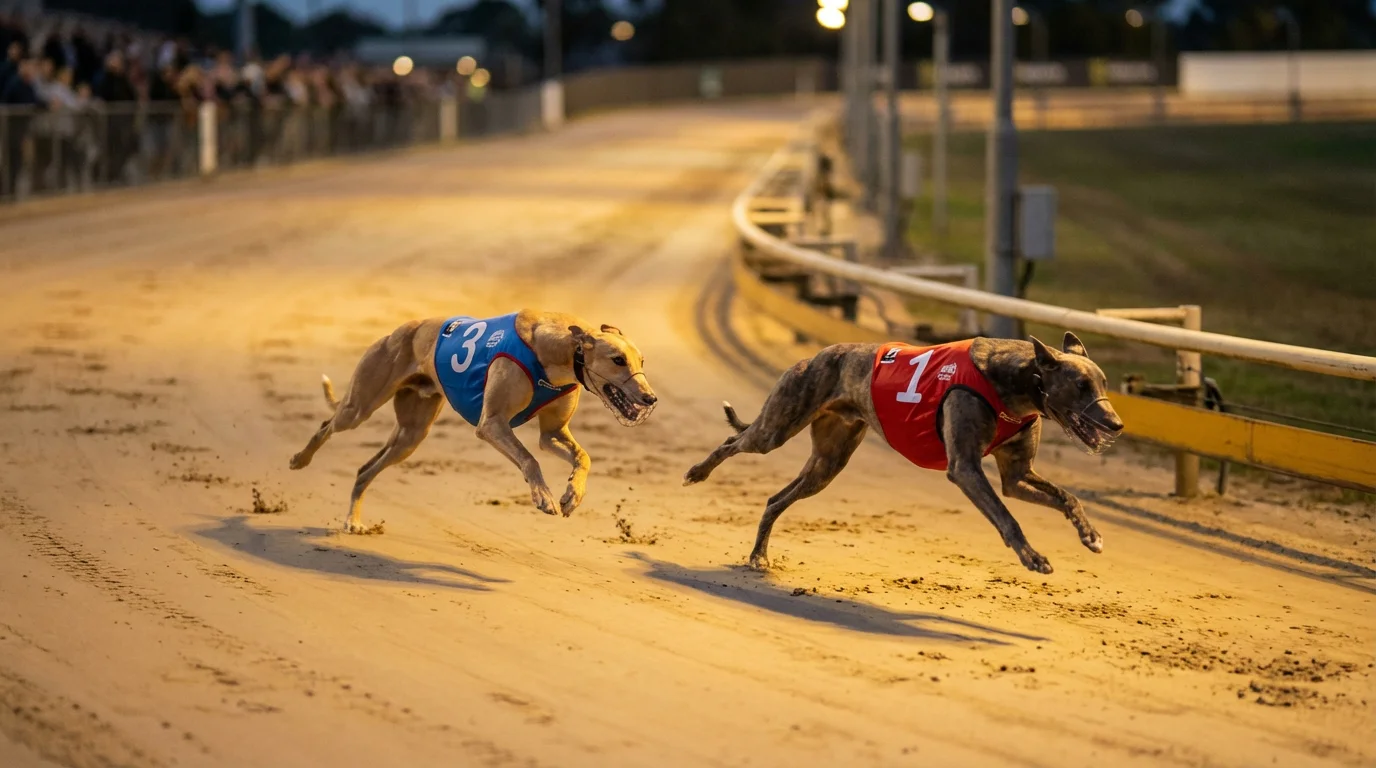
The Greyhound St Leger is the race that separates the sprinters from the stayers, and for ante-post bettors, that distinction changes everything about the analysis. While the English and Irish Derbies are decided over 500 to 550 yards — distances where raw pace can carry a dog through the early rounds — the St Leger is contested over a staying distance — 710 metres at Perry Barr historically, and 730 metres at Nottingham from 2025 — a distance that tests stamina, race craft, and the ability to maintain effort through additional bends and an extended home straight.
Ante-post betting on the St Leger operates under the same fundamental rules as any greyhound futures market: stakes are forfeited on non-runners, odds are set early and can shift dramatically, and the knockout format means your selection must survive multiple rounds to reach the final. But the form indicators that drive the analysis are different. Speed ratings over 500m are useful but insufficient. What matters here is sustained pace over a longer distance, and the dogs that excel at it don’t always come from the same kennels or carry the same profiles as Derby contenders.
This guide examines why the St Leger requires a distinct analytical approach, how the stamina-versus-speed dynamic plays out in ante-post pricing, and what historical patterns can tell you about where the value tends to sit in this market.
Why the St Leger Demands Different Form Analysis
The St Leger demands different form analysis because the distance changes the race. Over 710 metres or more, a greyhound runs roughly 40% further than in a standard 500m Derby race. That’s not just extra ground — it’s extra bends, extra opportunities for trouble in running, extra seconds where fatigue erodes a speed advantage, and extra demands on a dog’s cardiovascular system and running mechanics. A dog can dominate over 500m on pure speed and never be tested. Over 710m, something has to give, and the dogs that cope with that pressure are not always the ones you’d pick from a standard middle-distance race card.
The most immediate analytical shift is from early pace to sustained pace. In Derby-distance racing, trap speed — how quickly a dog breaks from the boxes and reaches the first bend — is one of the strongest predictors of success. In the St Leger, early pace still matters, but it’s no longer decisive. A dog that leads into the first bend but can’t maintain its effort through bends three, four, and five will fade, and the stayers who run on from mid-pack positions have time and distance to make up ground. When evaluating ante-post candidates for the St Leger, sectional times for the second half of their races are as important as overall finishing times.
Track-specific experience is also more relevant for the St Leger. Not every UK greyhound track hosts racing over 700m-plus distances, which means the pool of dogs with genuine long-distance form is narrower than the pool competing over Derby distances. Some tracks — historically Nottingham, and more recently venues that have hosted Category One stayer events — are the primary sources of relevant form data. A dog that has run well over 640m or 710m at a specific track, particularly in open or graded stayer races, is providing evidence that doesn’t exist for dogs whose form is entirely over shorter trips.
The physical profile of a St Leger contender tends to differ from a Derby type. Stayer dogs are often — though not always — slightly larger, with longer strides and a running style that favours rhythm over explosive acceleration. This isn’t a universal rule (some compact, fast dogs have won the St Leger by leading from box to line), but it’s a tendency that shapes the ante-post market. The dogs priced shortest in St Leger ante-post markets are typically those with proven stayer credentials: wins or strong performances in 640m+ events, consistent finishing speed, and a record of handling multi-bend courses without losing position on the turns.
One analytical trap to avoid: assuming that a dog’s performance over 500m automatically translates to 710m. It sometimes does, particularly for dogs with obvious stamina reserves — those that finish their 500m races strongly and look like they have more to give. But plenty of talented middle-distance dogs have failed to stay the St Leger trip, and the ante-post market occasionally misprice entries based on their Derby form without adequately accounting for the distance question. If a dog’s form is exclusively over 480m to 550m, and it’s never been tested beyond that, treat its St Leger ante-post price with caution. The stamina might be there, or it might not. At ante-post prices, you’re being asked to bet on the unknown — and the St Leger distance makes that unknown bigger than most punters appreciate.
Stamina Dogs vs Speed Dogs: Ante-Post Implications
The ante-post market for the St Leger often reflects a tension between two types of contender: the proven stayer and the classy middle-distance dog stepping up in trip. Understanding how the market prices each type — and where it tends to get the balance wrong — is one of the few genuine edges available in a thin futures market.
Proven stayers are dogs with a documented record over 640m or longer. They’ve run stayer races at tracks that offer the distance, they’ve typically won or placed in open stayer events, and their form guide shows they can maintain pace through extra bends. In the ante-post market, these dogs are priced on what the market knows: they can handle the trip. Their prices tend to be shorter because the distance question — the biggest variable in St Leger betting — is already answered. The risk with backing proven stayers at ante-post prices is that the market has already priced in their stamina, and you’re paying for certainty. The value has been compressed.
Classy middle-distance dogs stepping up are the opposite proposition. These are Derby-calibre runners — fast, well-graded, with strong form over 480m to 550m — that connections are aiming at the St Leger because they believe the stamina is there but hasn’t been publicly tested. Their ante-post prices are typically longer because the market can’t confirm they’ll stay the trip. This uncertainty is what creates ante-post value. If you’ve studied the dog’s running style, breeding (stayer bloodlines are identifiable in greyhound pedigrees), and late-race sectional times, and you believe the stamina is genuine, you’re getting a price that compensates for a question the market hasn’t answered yet.
The catch is that this analysis is harder to do with confidence in greyhound racing than in horse racing. Greyhound form guides provide less detail on breeding and pedigree analysis is less developed as a public tool. You’re relying more on observable race data — how the dog finishes its races, whether it’s still accelerating at the line, how it handles the final bend when others around it are tiring. These are meaningful signals, but they’re not definitive proof that a 500m specialist will handle an extra 210 metres of racing.
The practical ante-post strategy for the St Leger is to look for dogs that bridge both categories: genuine speed over the standard distances, plus at least one piece of evidence — a stayer trial, a 640m race, a bloodline known for stamina, or a running style that consistently shows late reserves — suggesting the trip won’t be a problem. These dogs are sometimes available at middle-range prices (12/1 to 25/1) because they don’t fit neatly into either the “proven stayer” or “untested sprinter” bucket. The market struggles to price them accurately, and that’s exactly where ante-post value appears.
One more nuance: the St Leger’s knockout format means that even dogs with genuine stamina can be eliminated by bad luck in the heats. A poor trap draw, interference on the first bend, or a slow break in a round where the margins are tight — these events end campaigns regardless of talent. The attrition risk is lower than in the Derby (smaller starting fields, fewer rounds), but it’s non-zero, and it’s built into the ante-post price you’re taking. Accept it as a cost of doing business in this market.
Historical Trends and Price Patterns
The St Leger ante-post market has historically been thinner than the Derby market, which creates both challenges and opportunities. Fewer bookmakers price it aggressively, prices can be lumpy (significant gaps between available odds at different firms), and early market movements carry more weight because less money is required to shift the line. For ante-post bettors, this thinness means that price comparison is essential — the difference between 16/1 and 25/1 on the same dog across two bookmakers is not unusual in St Leger futures.
Historical winners of the St Leger show a clear pattern: trainers with stayer specialisms, or at minimum, trainers who have previously fielded dogs in long-distance Category One events, dominate the results. This isn’t surprising — the St Leger trip is a specific test, and trainers who know how to prepare dogs for it have a demonstrable edge over those entering the race experimentally. When ante-post markets open, checking whether a trainer has previously had runners (not just winners, but runners that competed) in the St Leger or equivalent stayer events is a useful filter.
Price patterns in St Leger ante-post markets tend to be less volatile than in the Derby. The smaller field and the specialist nature of the event mean the market identifies frontrunners earlier and prices them more accurately from the outset. Derby ante-post markets, with 192 entries and enormous uncertainty, see wild price swings through the heats. St Leger markets, with fewer runners and a more defined form profile, are steadier. This stability means that the best ante-post prices are often available in the first window of market activity — early movers who shape their positions in the initial 48 hours after the market opens tend to capture the widest prices on genuine contenders.
Another historical note: the St Leger has produced fewer shock results at the final stage than the Derby. The stayer trip acts as a natural filter, eliminating pretenders before the final and leaving a field of dogs whose credentials have been tested by the distance. This makes the final itself more predictable — favourites and second-favourites have a slightly better record in St Leger finals than in Derby finals. For ante-post punters, this suggests that contrarian approaches (backing longshots in hope of an upset) are slightly less rewarding in the St Leger. The value is more likely to come from correctly identifying the contender whose price doesn’t yet reflect its stayer form.
The Long Run Home
The St Leger is greyhound racing’s distance test, and ante-post betting on it is a patience test within a patience test. You’re waiting weeks for a result on a dog that itself has to prove it can endure longer than the competition. There’s a certain symmetry in that — the bettor and the dog are both being asked for something beyond the standard effort.
For punters willing to do the work — studying stayer form, analysing late-race sectional data, tracking trainers with long-distance pedigrees, and shopping prices across a thin market — the St Leger offers something the Derby doesn’t. A more predictable final-stage outcome, a narrower field of genuine contenders, and a market that’s slightly less efficient because fewer bettors bother to specialise in it. The volume of ante-post money is smaller, the analysis required is more specific, and the reward for getting it right is a price that reflects the market’s relative indifference to the event.
The long run home at the St Leger is where the race is won — that final stretch where the stayers pull clear and the pretenders fall away. The ante-post market has a long run too. The punters who stay the distance, who resist the urge to back a Derby favourite at a short price just because the name is familiar, and who instead identify the true stayer at a true value price — those are the ones who cross the line first.
