
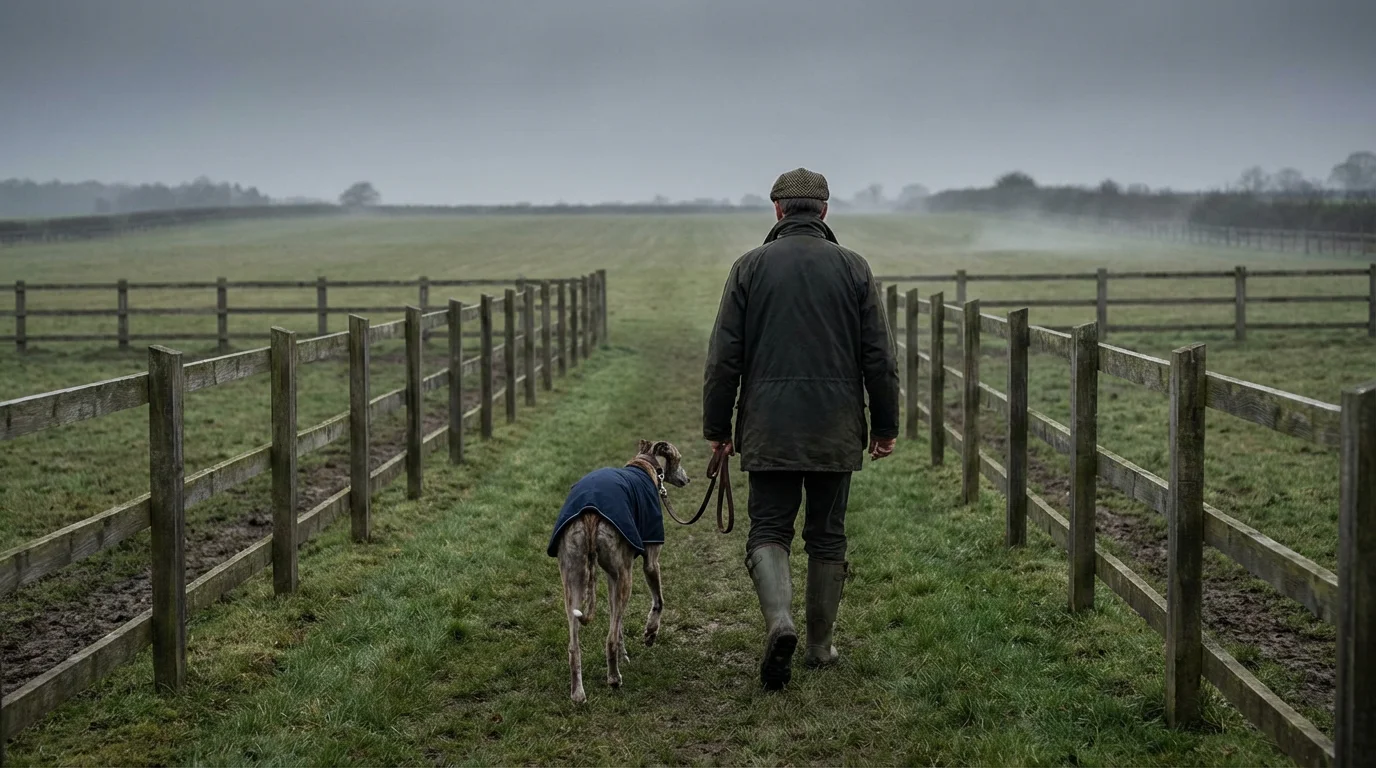
In horse racing, the trainer’s name is the first thing most punters look at after the horse itself. In greyhound racing, trainer analysis is far less common — many punters can name the top two or three kennels but couldn’t tell you who trains the dog they backed last Tuesday. That’s a missed opportunity, particularly in ante-post markets. The trainer is the single most important environmental factor in a greyhound’s preparation for a major event, and the difference between a kennel that knows how to peak a dog for a Derby and one that doesn’t is the difference between a live contender and an also-ran.
Ante-post greyhound markets price dogs primarily on recent form — times, grades, and finishing positions. What they often underweight is the trainer’s track record in bringing dogs to major events in peak condition, navigating the multi-round format, and managing the physical demands of a knockout tournament that can span three to four weeks. That underweighting is where the value hides.
This article covers why trainer records should be central to your ante-post analysis, profiles the leading trainers in UK and Irish greyhound racing, and explains how to research kennel form so you can identify the training operations most likely to produce the next major-event winner.
Why Trainer Records Drive Ante-Post Value
A greyhound doesn’t train itself. Every aspect of a dog’s preparation — nutrition, exercise, trial scheduling, recovery management, race selection, and peak timing — is controlled by the trainer. Two dogs with identical raw ability can produce vastly different outcomes depending on the quality of their training. In major events, where the margin between progression and elimination is measured in fractions of a second, the trainer’s skill in optimising a dog’s condition is frequently the decisive factor.
Major greyhound events are endurance tests disguised as sprint races. A dog competing in the English Derby might race six times over three to four weeks — heats, quarter-finals, semi-finals, and the final. Each round demands peak physical output, and the recovery window between rounds is typically four to seven days. Managing that cycle — keeping a dog fresh enough to perform in round five or six while sharp enough to win individual races along the way — requires training expertise that not every kennel possesses.
The trainers who win major events consistently are the ones who have mastered this peaking process. They know when to trial and when to rest. They understand how to manage a dog’s weight and muscle condition across a multi-week campaign. They’ve learned, through years of experience, how to read the signs that a dog is approaching peak form versus the signs that it’s beginning to fatigue. This expertise is repeatable — which is why the same kennel names appear in major event finals year after year, even with different individual dogs.
For ante-post bettors, this repeatability is the key insight. A dog from a kennel with a proven record of reaching major event finals is a statistically better ante-post proposition than an equally fast dog from a kennel with no major-event pedigree. The form card might look similar. The ante-post odds might be similar. But the probability of surviving the tournament path is not similar — and the difference flows directly from the trainer’s experience and methods.
Markets don’t always price this correctly. The ante-post odds on a dog are influenced primarily by its recent race times and grading trajectory — the visible, quantifiable data. The trainer’s tournament-management record, while publicly available, is less visible and less commonly factored into the casual punter’s assessment. When the market prices two dogs equally but one comes from a kennel that has produced three Derby finalists in the last five years and the other comes from a kennel that has never had a dog past the quarter-finals, there’s an information gap that ante-post bettors can exploit.
Top Trainers in UK and Irish Greyhound Racing
A handful of trainers dominate major greyhound events in the UK and Ireland. Their kennel names appear repeatedly in the betting and on the final night, and understanding their strengths helps contextualise ante-post selections.
Graham Holland operates from Riverside Kennels in Golden, County Tipperary, and is arguably the most successful greyhound trainer of the modern era. His kennel has produced multiple English Derby winners, including back-to-back victories with Romeo Magico (2022) and Gaytime Nemo (2023), a record five Irish Derby winners, and St Leger winners across the last decade. Holland’s operation is characterised by volume — he enters multiple dogs in major events, giving himself several chances rather than relying on a single representative — and by a meticulous preparation regimen that consistently peaks dogs for the knockout stages. When a Holland-trained dog appears at 16/1 or longer in an ante-post market, the price often undervalues the kennel’s structural advantage in tournament management.
Patrick Janssens, Belgian-born but based in England, has built a formidable record with dogs that combine European-bred stamina with the pace required for British-style racing. Janssens, a former kennelhand for Mark Wallis who went on to win the 2020 Trainer of the Year title and the 2021 and 2025 English Greyhound Derbys, has featured prominently in the English Derby and the St Leger, and his approach to preparation — often involving extensive trialling at the host venue — gives his runners a track familiarity advantage that other entries may lack.
Liam Dowling, from Ballymacelligott near Tralee in County Kerry, is one of Ireland’s most consistent producers of major-event contenders. Dowling’s kennel tends to specialise in dogs with strong early pace — the kind of runners that dominate from the traps and avoid the trouble that eliminates slower starters in competitive heats. His dogs’ front-running style is particularly effective in the knockout format, where avoiding interference is as important as raw speed.
In the UK, trainers like Charlie Lister, Kevin Hutton, and Mark Wallis have strong records in Category One events. Lister’s Newark-based kennel produced a record seven English Derby winners and seven Scottish Derby winners before his retirement in 2018, with a particular strength in staying events like the St Leger. Hutton, based in Burford, Oxfordshire, has a track record of developing progressive dogs that improve through a competition — the kind of form trajectory that makes for strong ante-post selections when the market hasn’t yet adjusted to the improvement. Wallis, operating from Imperial Kennels in Lakenheath, Suffolk, combines a record sixteen Trainer of the Year titles with a training programme that emphasises speed and early pace.
These profiles are not exhaustive, and new trainers emerge regularly. But the pattern is consistent: the kennels that succeed in major events tend to do so repeatedly, and their track record is a more reliable indicator of tournament performance than any individual dog’s time figure. When building an ante-post shortlist, starting with dogs from proven major-event kennels and working outward is a more efficient process than starting with raw form data alone.
How to Research Kennel Form
Trainer form in greyhound racing is less readily accessible than in horse racing, where dedicated trainer statistics are standard on form sites and bookmaker platforms. Researching greyhound kennel form requires some manual effort, but the data is available if you know where to look.
The Racing Post’s greyhound section is the primary starting point. You can search for individual trainers and see their recent runners, results, and race-by-race history. For ante-post purposes, the most relevant data is major-event participation: how many dogs has this trainer entered in the English Derby, Irish Derby, or St Leger over the last five years? How many of those dogs reached the semi-finals or the final? What was the trainer’s strike rate in heats — the proportion of entered dogs that progressed? These numbers tell you whether the kennel consistently produces dogs that survive the tournament format.
GreyhoundStar and specialist greyhound forums provide less structured but often more granular information about kennel activity. Forum users with close connections to specific tracks or regions will discuss training methods, trial performances, and kennel whispers that don’t appear in official form data. This information is anecdotal and should be treated with appropriate scepticism, but patterns in credible forum discussion — multiple users reporting that a particular kennel’s dogs look sharp in trials, for instance — can provide early signals that complement the statistical record.
Social media accounts of trainers and racing enthusiasts offer another layer. Some trainers post trial videos, kennel updates, and competition plans on Twitter or Facebook. These posts give you a window into the preparation timeline — when a trainer begins trialling a dog at the Derby venue, how the dog looks in those trials, and which dogs the kennel considers its primary contenders. Not every trainer uses social media, but those who do provide information that’s available to anyone willing to follow the accounts and pay attention.
When compiling trainer research for ante-post purposes, focus on three metrics: major-event participation rate (does this kennel regularly enter major events?), progression rate (what proportion of entries survive past the first round?), and finalist rate (how often does this kennel produce a dog that reaches the final?). A kennel with a high participation rate but a low progression rate enters lots of dogs but doesn’t prepare them effectively for tournament racing. A kennel with a high progression rate but low finalist rate is good at getting through the early rounds but can’t produce a peak performance when it matters most. The best ante-post trainers score well on all three.
The Trainer Bet
Every ante-post greyhound bet is, to some degree, a trainer bet. You’re backing a dog, but you’re relying on the trainer to deliver that dog to the final in peak condition — a process that takes weeks of careful management and involves decisions that you as the punter have no visibility into until the results emerge. The trainer who gets that process right, year after year, gives their dogs a structural advantage that transcends individual form figures.
When the ante-post market prices a dog primarily on its most recent times and grade, it’s telling you what the dog has done. When you add the trainer’s major-event record to that assessment, you’re estimating what the dog can do — under the specific conditions of a high-pressure, multi-round tournament. The gap between those two assessments is where the trainer’s value lives, and it’s one of the most underexploited edges in ante-post greyhound betting.